

Functional .NET applications are becoming more popular in software development. They focus on clean, predictable code using mathematical functions. When building these applications, developers often choose between F# and C#. Both languages work well with .NET but have different strengths.
F# is designed for functional programming first. It makes immutability and data processing easy. C# supports multiple styles, including functional programming. This guide will help you pick the right language for your next project.
Understanding the differences between F# and C# is key. Each has unique features that suit different needs. Let’s explore how they compare for building functional .NET applications.
Understanding Functional Programming in .NET

Functional programming focuses on using functions to build software. It avoids changing data after creation, which reduces bugs. This approach makes code easier to test and maintain.
Immutability is a core concept in functional .NET applications. Once a value is set, it never changes. This prevents unexpected side effects in your programs. Functions are also treated like variables, allowing flexible code structures.
Higher-order functions take other functions as inputs or outputs. They help create reusable and modular code. These features make functional programming powerful for complex logic.
Imperative programming, in contrast, relies on step-by-step instructions. It can be simpler for some tasks but harder to debug. Functional programming offers a cleaner alternative for many scenarios.
Overview of F# for Functional .NET Applications
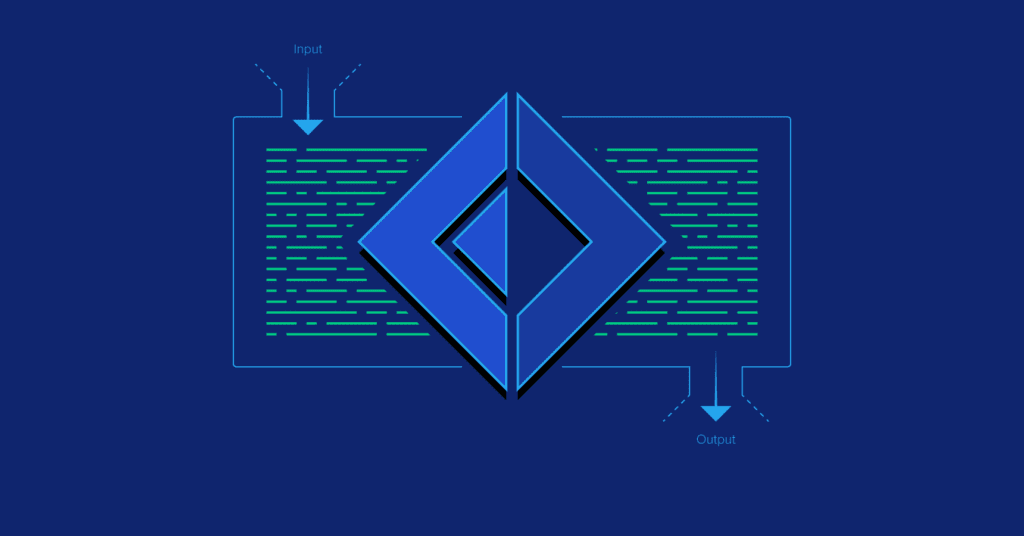
F# is a functional-first language in the .NET ecosystem. It simplifies writing functional code with a clean syntax. The language also supports object-oriented and procedural styles when needed.
Data analysis and scientific computing work well with F#. Its functional design handles complex calculations smoothly. Financial modeling also benefits from F#’s precise mathematical functions.
Concurrent programming is easier with F#. Its async workflows manage parallel tasks efficiently. These features make F# a strong choice for functional .NET applications.
F# encourages immutability by default. This reduces bugs and makes code more predictable. The language also has powerful type inference, so you write less boilerplate code.
Advantages of Using F# in .NET Development
F# is built for functional programming from the ground up. Its syntax is concise, letting you do more with fewer lines. This makes development faster and code easier to read.
The language’s type system catches errors early. You spend less time debugging and more time building features. F# also works seamlessly with other .NET languages like C#.
Higher-order functions and pattern matching are native in F#. These tools help write expressive and maintainable code. The language also supports advanced features like computation expressions.
F# integrates with the full .NET library ecosystem. You get functional programming benefits without losing access to powerful tools. This balance makes F# ideal for many functional .NET applications.
Overview of C# for Functional Programming
C# is a versatile language that supports multiple coding styles. While object-oriented by default, it includes functional features. This flexibility makes it popular for many .NET projects.
Lambda expressions and LINQ bring functional concepts to C#. They allow cleaner data transformations and queries. These tools help write functional-style code within a familiar language.
C# works across web, desktop, mobile, and cloud platforms. Its broad use cases make it a practical choice. The language also keeps evolving with more functional capabilities.
Developers already using .NET often prefer C# for consistency. Its large community and resources help solve problems quickly. C# balances functional and imperative approaches effectively.
Advantages of Using C# in .NET Development
C# supports multiple programming paradigms in one language. You can mix functional and object-oriented styles as needed. This adaptability suits projects with changing requirements.
The .NET ecosystem provides extensive libraries for C#. You get tools for almost any development task. C# also performs well, making it reliable for high-speed applications.
Strong typing in C# helps catch errors early. This leads to more stable and maintainable code. The language also keeps improving with new functional features.
Cross-platform development is easy with modern C#. You can build apps for Windows, macOS, and Linux. This flexibility makes C# a strong contender for functional .NET applications.
Comparing F# and C# for Functional .NET Applications
F# is the better choice for pure functional programming. Its design encourages immutability and expressive syntax. Developers focused on data or math-heavy apps often prefer F#.
C# offers functional features while staying multi-paradigm. It works well when blending functional and object-oriented code. Teams already using C# can adopt functional styles gradually.
F# has a steeper learning curve for non-functional developers. C# feels more familiar to those with OOP backgrounds. Your team’s skills may influence which language fits better.
Both languages run on .NET and share libraries. Performance differences are usually minor. The best choice depends on your project’s specific needs.
Conclusion
Choosing between F# and C# depends on your project goals. F# excels at pure functional programming with concise syntax. C# offers flexibility with functional features alongside other paradigms.
Both languages build strong functional .NET applications. F# is ideal for math-heavy or data-focused projects. C# works better when blending styles or leveraging existing .NET skills.
Need help deciding or building your application? Contact Progressive Robot for expert .NET development services. Our team delivers high-quality solutions tailored to your needs.