

When companies need to scale their teams efficiently, staff augmentation has emerged as a powerful alternative to traditional hiring methods. The past two years saw unprecedented workforce reductions across industries, with major tech firms and startups alike implementing massive layoffs that prompted organizations to explore flexible workforce strategies.
Businesses now face a critical decision between two approaches: bringing in temporary specialists or developing existing talent. Each method offers distinct advantages depending on organizational needs and circumstances.
This analysis compares both workforce strategies objectively. We’ll examine their respective benefits, ideal use cases, and potential drawbacks to help you make informed decisions.
Understanding the Two Approaches

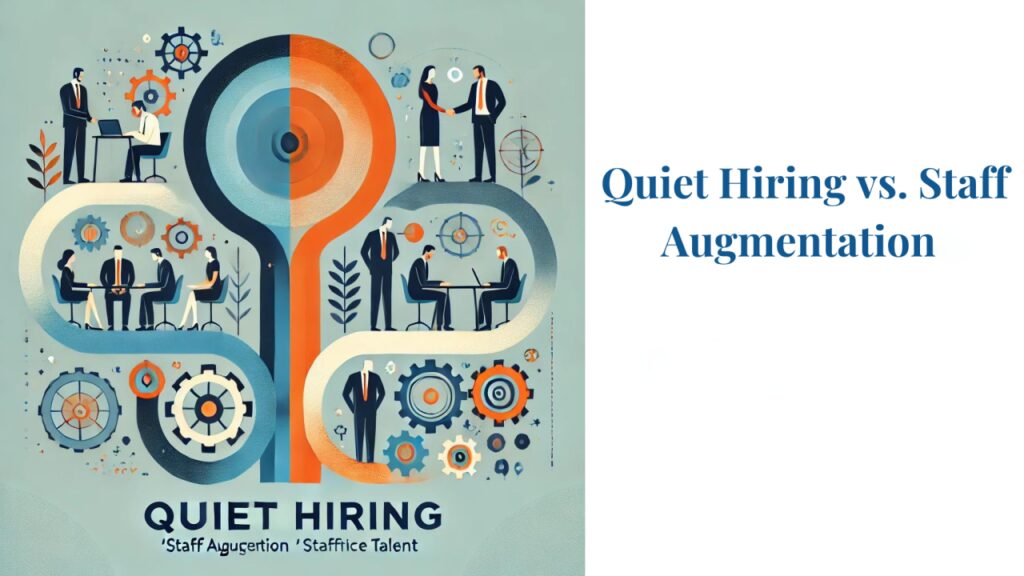
Staff augmentation involves contracting external professionals for specific projects or periods. Companies access specialized skills without long-term employment commitments. This flexible model proves particularly valuable for short-term needs.
Quiet hiring focuses on internal talent mobility instead. Organizations identify existing employees who can take on additional responsibilities or transition into new roles. This approach maximizes current workforce potential while avoiding external recruitment.
Key Differentiators

The fundamental distinction lies in talent sourcing. One looks outward for immediate solutions while the other develops internal capabilities. Both strategies can coexist within an organization’s workforce planning.
Implementation timelines vary significantly between the approaches. External professionals can typically onboard within days, whereas internal transitions require training periods. The right choice depends on project urgency and existing staff capabilities.
Cost structures also differ substantially. While bringing in specialists involves higher hourly rates, developing internal talent requires investment in training and potentially temporary productivity dips.
Optimal Use Cases
Project-based work often benefits most from temporary specialists. Software development sprints, marketing campaigns, and seasonal surges represent ideal scenarios. The ability to scale precisely to need proves invaluable.
Organizations with strong internal talent pipelines might prefer developing existing staff. This approach works particularly well for leadership development and knowledge retention. It fosters employee engagement and career growth opportunities.
Companies facing specialized technical challenges may find the expertise they need isn’t available internally. In such cases, the temporary approach provides immediate access to required skills without long-term overhead.
Potential Challenges

Cultural integration presents a common hurdle with external professionals. Temporary workers may lack organizational knowledge that affects collaboration effectiveness. Proper onboarding processes can mitigate this significantly.
Internal transitions risk overburdening high performers if not managed carefully. Without proper boundaries and support systems, employee burnout becomes a genuine concern that requires proactive management.
Budget considerations play a crucial role in strategy selection. Organizations must weigh immediate costs against long-term investments in their workforce development.
Strategic Implementation

Many successful organizations blend both approaches strategically. They maintain core competencies internally while bringing in specialized expertise as needed. This balanced approach offers flexibility and continuity.
Progressive Robot provides tailored workforce solutions that align with organizational goals. Their expertise helps companies navigate these decisions effectively, ensuring optimal team composition for every project phase.
Key Limitations to Consider
Staff augmentation presents cultural integration challenges. Temporary workers may lack company-specific knowledge. Knowledge transfer becomes crucial for success.
Quiet hiring risks overburdening top performers. Without proper boundaries, burnout increases. Workload distribution requires careful management.
Budget constraints influence model selection. Staff augmentation costs more short-term. Quiet hiring investments pay off gradually.
Making the Right Choice
Evaluate your project timelines critically. Staff augmentation delivers faster results immediately. Quiet hiring develops sustainable capacity long-term.
Assess your existing workforce capabilities thoroughly. Internal skills may surprise you sometimes. External expertise fills gaps other times.
Consider Progressive Robot for staff augmentation needs. Their vetted professionals integrate seamlessly. You get the right skills exactly when needed.
Final Recommendations
Staff augmentation solves immediate skill shortages effectively. It’s perfect for specialized, time-sensitive projects. The model scales teams up and down flexibly.
Quiet hiring builds organizational resilience strategically. It develops employee skills and loyalty. The approach fosters long-term stability.
Many businesses combine both approaches smartly. Progressive Robot can help design your optimal mix. Contact us today to discuss customized solutions.